Exploring Rome's ancient ruins in a single day can feel overwhelming. With over 2,000 years of history packed into one city, visitors often waste precious hours navigating crowds, missing key sites, or standing in endless ticket lines. Recent surveys show 68% of first-time travelers leave Rome wishing they'd seen more iconic landmarks, while 42% report frustration with disorganized on-site information. The challenge isn't just ticking off the Colosseum and Pantheon – it's experiencing their grandeur without the stress of logistics or fear of missing hidden details that bring ancient Rome to life. Morning queues at major attractions regularly exceed 90 minutes, eating into limited sightseeing time, while lesser-known gems like the Baths of Caracalla remain overlooked despite offering equally breathtaking history with a fraction of the crowds.
Beating the Colosseum crowds: When to arrive and what most miss
The Colosseum's first opening hour remains Rome's best-kept secret. While most guidebooks suggest arriving by 9am, locals know the 8:30am slot offers near-empty corridors and perfect photo opportunities at the gladiator's entrance. Security lines move fastest before 8:45am when large tour groups arrive. Inside, most visitors cluster at the arena level, missing the recently reopened underground hypogeum where animals and gladiators awaited their fate. These restricted areas require advance booking but reveal the engineering marvels that made Roman games possible. For those without reservations, the upper third tier (open since 2017) provides unexpected panoramic views spanning the Arch of Constantine to Palatine Hill, with interpretive panels explaining ancient seating arrangements by social class.
UPDATES FOR YEAR 2026
Essential Booking Updates and New Access Fees for Major Archaeological Sites
Navigating Rome’s ruins now requires careful digital planning as the city has transitioned to a strictly controlled entry system. The most significant shift is the mandatory use of nominative tickets for the Colosseum; every ticket must be registered to a specific person, and staff now conduct mandatory ID checks at the entrance to ensure names match your passport. All bookings should be made exclusively through the official 'ticketing.colosseo.it' portal 30 days in advance. Additionally, the Pantheon has fully implemented its entry fee system, requiring a €5 ticket and mandatory online reservations for weekend visits. Travelers should also account for the recently introduced €2 access fee for the Trevi Fountain’s lower basin area, a measure designed to manage post-Jubilee crowd levels. New archaeological highlights, such as the Corridor of Commodus at the Colosseum and the Horrea Piperataria warehouses in the Forum, are now accessible through 'Full Experience' or 'SUPER' tickets, offering deeper insights into the city's ancient logistical heart.
View all Tours
The Roman Forum shortcut: How to navigate history without a map
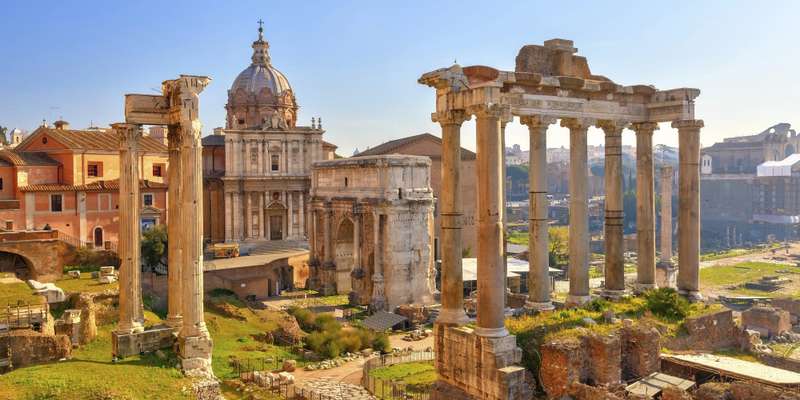
What appears as a sprawling archaeological site actually follows a logical ancient pathway most visitors overlook. Entering from the Via dei Fori Imperiali side (near Trajan's Column) lets you walk the original Via Sacra downhill like Roman citizens did, passing the Temple of Antoninus and Faustina before reaching the Forum's heart. Key sections like the House of the Vestal Virgins get crowded by noon, but the Basilica of Maxentius near the exit stays surprisingly quiet despite being the Forum's most intact structure. Look for the bronze door markers indicating original street levels – these subtle details reveal how modern Rome literally built upon the ancient city. Early afternoons bring harsh sunlight here; the arched passageways near the Temple of Romulus offer natural shade perfect for regrouping.
View all Tours
Pantheon hacks: Avoiding lines and understanding the oculus
Rome's best-preserved ancient building requires no ticket, yet midday queues stretch around Piazza della Rotonda. The 11:30am-1:30pm window sees peak crowds as tour groups combine it with lunch stops. Come post-lunch (2:15-3pm) when lines dissolve, or join locals at the 8:30am opening to see sunlight beam through the oculus unobstructed. Most miss that the floor's drainage system – visible as subtle grooves between marble slabs – has handled rain for 1,900 years. The Pantheon's acoustics were engineered for ancient ceremonies; stand near the tombs of Raphael or Vittorio Emanuele II to experience the 'whispering gallery' effect. Nearby, the less-visited Temple of Hadrian's columns now form part of Rome's stock exchange building – an easy stop en route to your next site.
View all Tours
Beyond the big three: Underrated ruins that save your schedule
The Baths of Caracalla offer Palatine Hill-scale grandeur with 90% fewer visitors and included audio guides. Just two metro stops from the Colosseum, their towering walls preserve mosaic fragments and underground tunnels where slaves maintained the ancient spa complex. For time-strapped travelers, the Theater of Marcellus near the Jewish Ghetto provides a Colosseum-like experience without tickets or lines – this working-class entertainment venue still influences modern architecture with its stacked arch design. If crossing the Tiber, Hadrian's Mausoleum (Castel Sant'Angelo) connects to St. Peter's via the picturesque Passetto di Borgo walkway. These sites collectively cover Rome's social history from emperors to common citizens while avoiding the main archaeological park's time-consuming security checks.
View all Tours
FAQ 2026
Do I need to show my passport to enter the Colosseum in 2026?
Yes, all Colosseum tickets are now nominative and non-transferable. You must present a valid physical ID or passport that matches the name printed on your ticket to clear security.
Is the Pantheon still free to visit in 2026?
No, the Pantheon now requires a €5 entry fee for adults. While you can sometimes buy tickets on-site with cash, online booking is mandatory for weekends and public holidays to guarantee entry.
Are there new entry fees for other Roman landmarks in 2026?
Yes, a new €2 fee has been implemented to access the lower basin area of the Trevi Fountain to help manage foot traffic, though viewing the fountain from the surrounding square remains free.
Written by Rome Tours Editorial Team & Licensed Local Experts.
Last updated: 23/02/26
